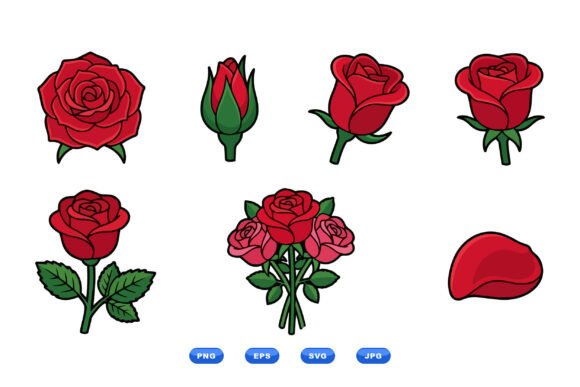
Red Poppy Clipart Collection
When I first opened the Red Poppy Clipart Collection, my initial thought wasn't about the file formats or the vector quality, but rather the immediate emotional resonance of the imagery. As a designer who spends hours troubleshooting stitch density and fabric tension, I am constantly looking for assets that translate well from screen to needle. This set immediately felt like it belonged in a boutique nursery or a rustic kitchen towel line. It captures a specific mood: vibrant yet grounded, perfect for botanical branding or personal gifts that need a touch of nature without feeling overly ornate.
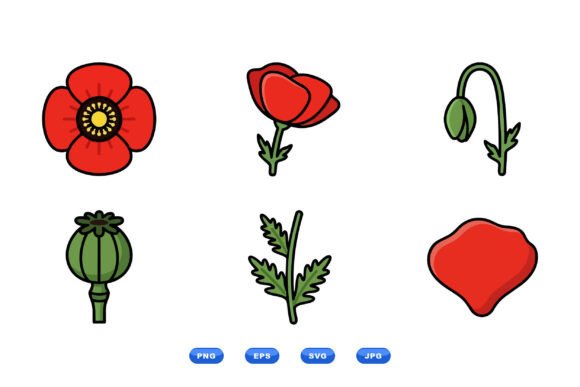
The collection features six distinct elements, ranging from an open flower bud to a seed pod, individual petals, and foliage. In the world of Illustrations and Graphics, having these separate components is a game-changer. Instead of being stuck with one static image, you have the flexibility to deconstruct the poppy into its core parts. This modularity allows me to create custom compositions that fit specific project constraints, whether I am designing a small embroidered patch for a denim jacket or a larger floral motif for a tote bag.
From Screen to Stitch: A Real-World Scenario
Let's talk about a real scenario. Imagine you are preparing a custom order for a local client who wants a personalized gift for their new baby—a soft sweatshirt with a subtle floral detail on the pocket. You decide to use the Red Poppy Clipart Collection. The challenge here isn't just finding a pretty picture; it's ensuring the design holds up after dozens of washes and maintains its visual integrity when stitched.
In this context, the open flower element serves as the focal point, while the smaller buds and single petals can be scattered around as accents. Because the source files are flat vectors, I can easily adjust the scale without losing resolution. However, before hitting the "stitch" button on my machine, I had to consider how the satin stitch would behave on the curves of the petals. Poppies have delicate edges, and if the digitization isn't handled with care, those curves can look jagged or lose definition on a stretchy knit fabric like a sweatshirt.
I tested the design by creating a mockup on a dark navy fabric to see how the red tones would pop. The contrast was striking, which suggests this design is excellent for high-visibility products. But I also ran a quick test on a light beige linen to ensure the details didn't get lost in the texture. The result was a balanced composition that felt professional and cohesive. This kind of practical testing is what separates a hobbyist's attempt from a commercial-grade finished product.
Where This Design Shines
The versatility of the Red Poppy Clipart Collection makes it suitable for a wide array of embroidery projects. It is particularly strong in categories where botanical themes are already popular. For instance, it works beautifully as a tote bag design for craft fairs, adding a splash of color to a canvas bag that customers can carry daily. The simplicity of the shapes ensures that the design remains legible even when printed on a large surface area.
Beyond apparel, I see immense potential in home decor. Imagine a set of matching tea towels featuring the seed pod and foliage elements. These items are often used frequently and washed regularly, so durability is key. The clean lines of the vector art allow for efficient fill stitch placement, which reduces the risk of puckering on thinner fabrics like cotton percale. Furthermore, for Etsy sellers and small shop owners, having these separate elements means you can create variations of the same design—perhaps a monogrammed version with just the petal, or a full bouquet for a wedding favor.
The design also lends itself well to commercial embroidery for branded merchandise. A coffee shop might use the poppy bud as a logo accent on their aprons, while a boutique could use the full bloom on their shopping bags. The vibrant nature of the poppy draws the eye, making it an effective tool for brand recognition. When customers see a consistent, high-quality embroidered logo, their trust in the brand increases significantly.
Critical Considerations for Embroidery Designers
While the artistic potential is high, there are specific areas where caution is required. If you plan to use this design on stretchy fabric like jersey or spandex, you must pay close attention to the stabilizer choice. Without adequate support, the tension of the thread can cause the fabric to distort, ruining the shape of the flower. Similarly, working with textured fabrics like fleece or heavy wool requires adjustments to the stitch length and density to prevent the design from sinking into the material.
Another critical factor is the hoop size. While the individual elements are versatile, attempting to stitch a complex arrangement in a very small hoop can lead to registration issues. The threads may not lay flat if the design is too tight for the frame. Additionally, if you are using this for an embroidered patch intended for iron-on application, ensure that the backing is robust enough to withstand the heat and pressure without fraying at the edges.
For dark fabric applications, the underlay becomes crucial. A standard underlay might not provide enough coverage for the bright red threads, leading to a dull appearance. I recommend running a test swatch to check the thread coverage before committing to a full production run. Also, be mindful of the thread colors you select; while the vector shows a vibrant red, your actual thread palette might vary slightly depending on the brand you use.
Practical Tips for Professional Results
To get the most out of the Red Poppy Clipart Collection, always start with a test run on scrap fabric. This simple step can save you hours of frustration and wasted materials. Check the stitch density carefully; if the fill areas are too dense, the fabric will become stiff and difficult to handle, especially for baby clothing where softness is paramount.
Review the small details, such as the tips of the petals and the center of the flower. These areas are prone to breaking or tangling if the digitization is not optimized. Use a running stitch for outlines if you want a softer, more hand-stitched look, or stick to satin stitch for a crisp, polished finish. Comparing the design in black and white mockups can also help you visualize how the negative space interacts with the fabric texture.
Finally, confirm the licensing terms before selling any finished items. Ensure that the digital embroidery file allows for commercial use of the final product. If you are a creative entrepreneur building a brand, understanding the legal boundaries is just as important as the technical execution. By taking the time to understand the limitations and strengths of the graphics within the collection, you can create handmade products that not only look beautiful but stand the test of time.
In conclusion, the Red Poppy Clipart Collection offers a solid foundation for a variety of embroidery projects. Its modular nature and clear shapes make it adaptable for both novice crafters and seasoned professionals. With careful planning regarding fabric selection, stabilizers, and stitch settings, this set can elevate your custom apparel and personalized gifts to a level of professionalism that resonates with buyers. Whether you are decorating a holiday gift or launching a new product line, this collection provides the visual punch needed to make your work stand out.