Dark Peony Floral Garden Tumbler Wrap Review
As someone who has spent years reviewing embroidery designs for both personal craft projects and commercial small business ventures, I know that the difference between a good product and a great one often lies in the details. Today, I am taking a close look at the Dark Peony Floral Garden Tumbler Wrap. While the product listing describes this as a digital graphic file intended for printing or tumbler wraps, I want to evaluate it through the lens of an embroidery designer. Can this design translate effectively into a stitched medium? How does it hold up when applied to real-world items like custom apparel, tote bags, or boutique merchandise?
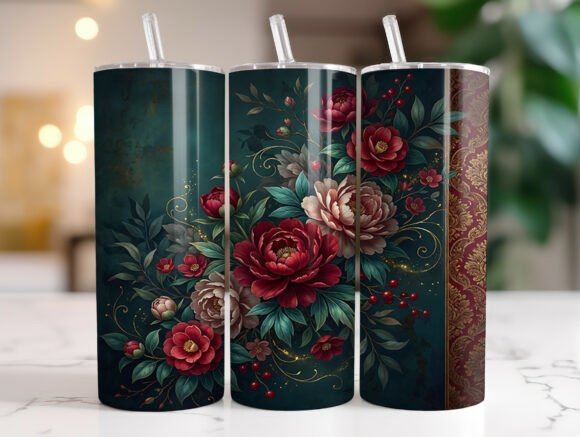
The first impression of the Dark Peony Floral Garden Tumbler Wrap is one of elegance and depth. The dark peony theme immediately suggests a sophisticated mood, moving away from the typical bright, cheerful florals often found in mass-market craft supplies. Visually, the layout is designed to wrap around a cylindrical surface, which presents a unique challenge when adapting it for flat embroidery applications like sweatshirts or aprons. The 9.3″ x 8.2″ dimensions offer ample space for detail, but the question remains: will the intricate petals maintain their integrity after stitching?
Real-World Application: From Digital File to Stitched Reality
Imagine you are preparing for a holiday market or fulfilling a rush order for a client who wants a personalized baby gift. You have the Dark Peony Floral Garden Tumbler Wrap in your library. In its native format, it is a high-resolution PNG meant for a printable mockup or a direct-to-garment transfer. However, many designers attempt to adapt these graphics into machine embroidery designs by tracing them or using them as underlays for complex fill stitches.
If you were to use this design on a heavy-duty item like a canvas tote bag, the visual appeal would be significant. The dark tones of the peony would pop beautifully against a neutral or denim background, creating a sense of luxury. For a handmade product, this level of detail signals quality to the customer. It elevates a simple tote bag into a statement piece. Similarly, if you are selling on Etsy or running a small shop, having a design with such strong character can help your brand stand out. It feels less like a generic clipart and more like a curated art asset.
However, the transition from a flat graphic to a 3D embroidered surface requires careful planning. The tapering nature of the original wrap design means that the center of the flower might need to be adjusted if you are placing it on a curved surface like a cap or a rounded pillow cover. If you simply stitch the straight PNG version onto a flat fabric without considering the curvature, the perspective could look slightly distorted once the fabric stretches over the form. This is where practical design judgment comes into play.
Navigating Fabric and Stitch Density Challenges
When evaluating the Dark Peony Floral Garden Tumbler Wrap for actual embroidery work, we must consider the limitations of the fabric texture and the machine capabilities. The design features dense floral elements, which implies a reliance on satin stitches and fill stitches to create the petal shapes. On thin fabrics or stretchy materials like jersey knit, this density can cause puckering. Without the proper stabilizer, the weight of the thread alone could distort the delicate curves of the peony.
I would advise testing this design on scrap fabric before committing to a finished product. If you are working with a textured fabric, such as a bouclé or a rough linen, the fine details of the flower might get lost in the weave. In such cases, the design works best on smoother surfaces like cotton twill, felt, or tightly woven polyester blends often used for patches or caps. The contrast is key here; the dark color of the design demands a lighter background to ensure the embroidery stands out clearly. Attempting to stitch this on dark fabric without a heavy underlay or white backing would likely result in a muddy appearance where the details vanish.
For those looking to create a custom embroidered patch using this design, the tapered edges present an interesting opportunity. The natural flow of the wrap allows for a clean border finish, which is essential for professional-looking patches. However, you must ensure that the outer edges are reinforced with a tight satin stitch to prevent fraying, especially if the final product will undergo frequent washing.
Strategic Use Cases for Designers and Sellers
This design is not a one-size-fits-all solution, but it excels in specific scenarios. For the embroidery project involving nursery decor, the dark peony motif offers a modern twist on traditional baby themes. It avoids the cliché pastels while maintaining a soft, organic feel. A pillow cover featuring this design could become a centerpiece in a boutique nursery collection.
In the realm of commercial embroidery, the Dark Peony Floral Garden Tumbler Wrap serves as an excellent design asset for branded merchandise. Imagine a coffee shop owner ordering a batch of aprons for their staff. Placing this design on the chest pocket adds a touch of artisanal flair that customers notice immediately. It enhances brand consistency and shows attention to detail. For an Etsy seller, using this design in digital previews or printable mockups can significantly boost buyer engagement, as the high resolution (300 DPI) ensures the image looks crisp even on smaller screens.
However, there are areas where caution is required. Small hoop sizes are generally not suitable for this full-wrap design due to the sheer amount of detail and the physical width of the pattern. Trying to force a 9.3-inch wide design into a 4-inch hoop will result in clipping or severe distortion. Additionally, avoid using this on items that require extreme flexibility, such as the cuffs of a sweatshirt or the collar of a fitted t-shirt, unless you are confident in your ability to manage the tension and stabilizer layers.
Practical Designer Notes for Execution
Before you download and start stitching, there are several critical steps to take. First, verify the licensing terms. Just because you own the digital file does not automatically grant you the right to sell every finished item made from it. Some licenses restrict commercial use, while others allow it with attribution. Always confirm whether the embroidery file allows for resale of the final product.
Second, review the stitch density. If you are converting this graphic into a true digitized file, check the thread colors carefully. Dark peonies often require a gradient of threads to achieve depth. Using a single solid color might make the design look flat and lifeless. Test the design in black and white mockups to see how the value contrast holds up. This helps identify any areas where the design might appear too dark or too light depending on the lighting conditions of your workspace.
Finally, inspect the small details. When zooming in on the original PNG, look for tiny lines or dots that might disappear during the digitizing process. These micro-details are what give the design its personality. If they are lost, the final product may look generic. Ensure you have the correct hoop size and that your stabilizer choice matches the fabric weight. For a heavy-duty application like a kitchen towel, a cut-away stabilizer is usually best to maintain the shape of the flower over time.
The Dark Peony Floral Garden Tumbler Wrap is a versatile and visually striking asset. Whether you are a hobbyist looking to create a special gift or a small business owner aiming to expand your product line, this design offers a strong foundation for creativity. By understanding its strengths and limitations, you can transform a simple digital graphic into a stunning, tangible piece of art that delights customers and elevates your brand.